Ground penetrating radar technology explained
Delve into Ground Penetrating Radar (GPR) tech: from principles to applications. Explore its depth, versatility, and real-world use with Red…






The PAS 128 utility survey, a cornerstone in the field of utility detection and mapping, signifies a monumental shift in how infrastructure projects are approached and executed. This article delves into the evolution of utility survey standards, illuminating the pivotal role of PAS128 surveys in shaping safer and more efficient construction practices.
A comprehensive guide to PAS 128 surveys: enhancing infrastructure safety and efficiency
Explore the depths of PAS128 Surveys and its critical role in modern infrastructure projects.
Unlike many forms of survey, underground service detection is generally not a definite measurement. Instead it is an interpretation of a wide range of varied data sources or pieces of evidence (GPR, electromagnetic instruments, visual evidence, documentation, site knowledge). PAS128 surveys allows the surveyor to define the level of confidence with which they have interpreted the position of a given feature which in turn gives the end user a clearer insight into the tolerances and risk associated with the data and how that should be managed in the planning or implementation of their project,” Nick, Head of UGS.


PAS 128 utility surveys emerged as a response to the growing need for standardised procedures in utility detection. Its implementation ensures a uniform approach, minimising risks and uncertainties in construction projects. The standard serves as a beacon, guiding industry professionals towards best practices in surveying underground utilities.
The journey from rudimentary detection methods to the sophisticated PAS128 surveys framework mirrors the advancements in technology and engineering principles. This progression highlights the industry’s commitment to continual improvement and adaptation to changing landscapes.
At its core, PAS 128 surveys are about establishing a reliable method for detecting and mapping underground utilities. The standard aims to reduce the risks associated with excavation, such as damage to existing infrastructure and potential hazards to workers.ts.
PAS128 surveys are applicable across various sectors, including construction, urban planning, and civil engineering. Its wide-ranging scope ensures that it caters to diverse project needs, from small-scale renovations to large-scale infrastructure developments.
The PAS 128 survey encapsulates a comprehensive set of guidelines designed to streamline the process of utility detection. This section breaks down its definition, purpose, scope, and application, providing a clear understanding of its foundational elements.
Diving deeper into the PAS 128 surveys, this section explores its methodology framework and the different types of surveys encompassed within it. It sheds light on the systematic approach and categorisation essential for effective utility detection.
The framework of PAS 128 surveys is meticulously structured, encompassing various stages of surveying from preliminary assessment to final documentation. This systematic approach ensures comprehensive coverage and accuracy in utility mapping.
PAS 128 categorises surveys based on the level of detail and accuracy required. These range from basic utility detection to in-depth mapping, each serving specific project requirements and complexities.
The PAS 128 utility survey encapsulates a comprehensive set of guidelines designed to streamline the process of utility detection. This section breaks down its definition, purpose, scope, and application, providing a clear understanding of its foundational elements.

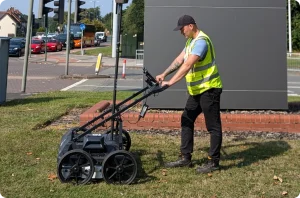
GPR stands out as a key technology in PAS 128 surveys. Its ability to penetrate different soil types and provide detailed images of underground utilities makes it an invaluable asset in the surveyor’s toolkit.
Electromagnetic techniques complement GPR in PAS 128 surveys. These methods are particularly effective in detecting metallic utilities and offer a non-invasive way to map underground infrastructure.
Quality assurance is a critical component of PAS 128 surveys. This part of the article addresses the standards and compliance measures in place to ensure accurate and reliable survey results.
Adhering to the stringent standards set by PAS 128 is paramount. This section discusses the compliance requirements and how they contribute to maintaining high-quality survey outcomes.
The accuracy of a PAS 128 utility survey is crucial for its effectiveness. This subsection covers the methodologies and practices employed to guarantee precise and dependable survey data.
Implementing PAS 128 is not without its challenges. This segment explores common obstacles faced by practitioners, along with solutions and the role of technological innovations in overcoming these hurdles. From technical difficulties to logistical constraints, various challenges can arise in PAS 128 surveys. This part delves into these issues and discusses practical solutions to address them effectively.
PAS 128 doesn’t exist in isolation. This section compares it with other global utility survey standards, highlighting its unique advantages and the rationale behind its growing adoption. Overview of PAS 128 survey
The PAS 128 utility survey encapsulates a comprehensive set of guidelines designed to streamline the process of utility detection. This section breaks down its definition, purpose, scope, and application, providing a clear understanding of its foundational elements.
A comparative analysis of PAS 128 surveys with other utility survey standards provides a broader perspective on its distinct features and advantages. This subsection elucidates why PAS 128 is often the preferred choice among professionals.
The adoption of PAS128 surveys brings numerous benefits, from improved safety to cost savings. This part outlines the compelling reasons for organisations and governments to embrace this standard.
At the forefront of PAS 128 surveys, Red Laser distinctively blends client-centric approaches with personalised service, ensuring each project is tailored to meet specific needs and expectations. Our utilisation of advanced survey technology marks a significant leap in precision and efficiency for underground utility mapping. Our technique not only enhances the accuracy of our surveys but also aligns seamlessly with our commitment to innovative solutions. Furthermore, our team, comprising professionals, brings a wealth of experience from handling large and complex projects. This depth of expertise enables us to navigate and successfully deliver even the most challenging surveys. By choosing our services, clients gain access to a unique combination of cutting-edge technology, bespoke service, and a track record of excellence. Our focus on client satisfaction and our ability to deliver high-quality, customised solutions sets us apart in the realm of PAS 128 surveys, making us the go-to partner for reliable, advanced, and client-focused surveying services.