Understanding сore drilling service
Explore how core drilling service can increase efficiency and ensure safety in your construction projects. Discover essential tips and learn…






In construction, what lies beneath the surface can make or break a project. Whether you’re cutting, coring, drilling, or planning structural changes, knowing exactly what’s under the concrete isn’t just helpful—it’s essential. That’s where advanced concrete scanning powered by Ground Penetrating Radar (GPR) comes into play.
Concrete slabs often conceal a network of embedded elements that are crucial to structural safety and performance. These may include:
Accurately locating these features helps avoid dangerous strikes, ensures compliance with design specifications, and prevents costly mistakes or delays. To accurately identify these hidden features, ferro scanning concrete technology is widely used. Ferro scanning involves using advanced electromagnetic or radar-based scanning tools to detect and map the location, size, and depth of ferrous materials like steel reinforcement within the concrete.

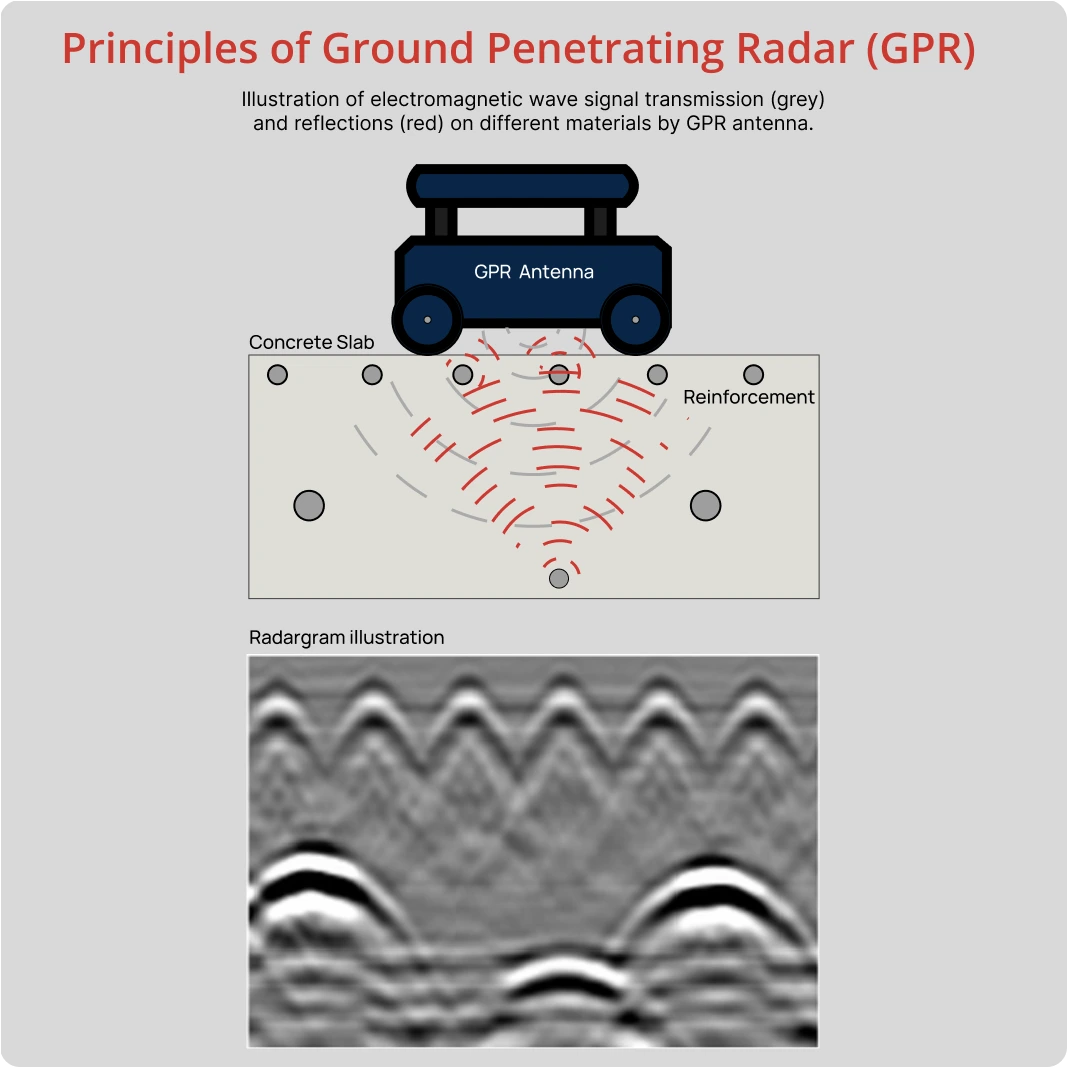
Depth analysis is a critical advantage of GPR. It estimates how far objects are embedded within the slab, enabling precise cutting, anchoring, and drilling decisions that protect both the structure and your team.
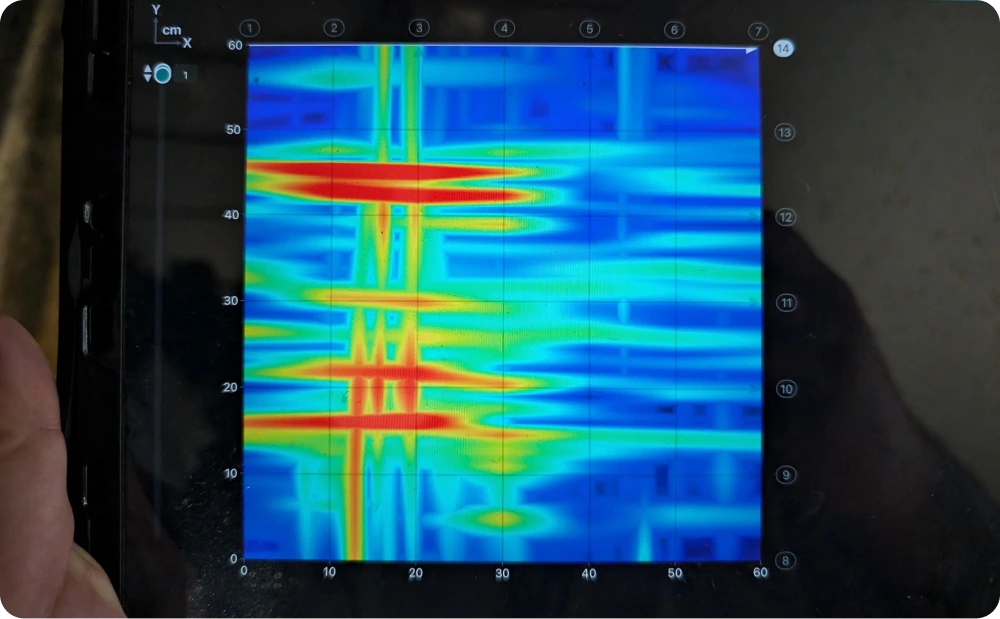
Understanding the spacing of rebar or post-tension cables is essential for accurate structural assessments. Proper spacing affects load distribution, structural integrity, and compliance with building codes. Using Ground Penetrating Radar (GPR) during a concrete scan provides detailed visuals of the internal layout, showing not just the presence but also the spacing and depth of reinforcement elements.
A precise concrete scan reduces uncertainty, enhances safety, and ensures informed decision-making for both new construction and renovation projects.
GPR also determines the thickness of concrete slabs, providing essential data for retrofitting, engineering validation, and structural analysis. It helps confirm whether the actual build matches the intended design.
In concrete scan, Non-Destructive Testing (NDT) refers to advanced inspection methods that assess the internal structure of concrete without causing any physical damage to the slab or structure. Instead of drilling, coring, or cutting to find what’s hidden inside, NDT methods like Ground Penetrating Radar (GPR) allow professionals to accurately locate embedded features, quickly, safely, and without disruption.
GPR is the industry-leading NDT tool for the concrete scan. It uses high-frequency radar pulses to detect objects within concrete, such as rebar, post-tension cables, conduits, voids, and pipes. The process leaves the surface untouched, making it ideal for both new builds and existing structures where preserving integrity is critical.
Whether you’re preparing to drill, core, cut or simply need to verify what’s below the surface, GPR-based NDT concrete scan gives you the insights you need without the risk of damaging the structure. It’s a safer, smarter, and more efficient way to scan concrete in today’s construction environment.
Striking live conduits, post-tension cables, or pipes can lead to injuries, structural failures, and costly project shutdowns. GPR scanning dramatically reduces these risks by identifying buried hazards before work begins.
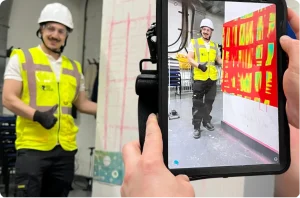
One of the most powerful advantages of modern GPR concrete scan is its ability to deliver real-time data. As scanning is performed, the system instantly detects and displays subsurface features, allowing technicians to identify rebar, conduits, voids, and other embedded elements on the spot, without waiting for off-site processing or lab results.
This immediate feedback enables surveyors to mark findings directly on the concrete surface, share results with site supervisors or engineers in real time, and make rapid decisions that keep the project moving forward. There’s no need to pause operations or delay work for analysis, which is especially valuable on tight construction schedules or in high-traffic work zones.
Real-time data also supports live collaboration between field teams and office-based stakeholders, improving coordination, reducing miscommunication, and allowing for faster responses to issues as they arise. Engineers can verify findings on-site, contractors can adjust workflows immediately, and project managers gain instant clarity on what’s happening below the surface.
In fast-paced construction environments, having reliable, actionable insights in real time isn’t just convenient, it’s a competitive advantage. Real-time GPR data ensures that decisions are made with clarity, speed, and precision.
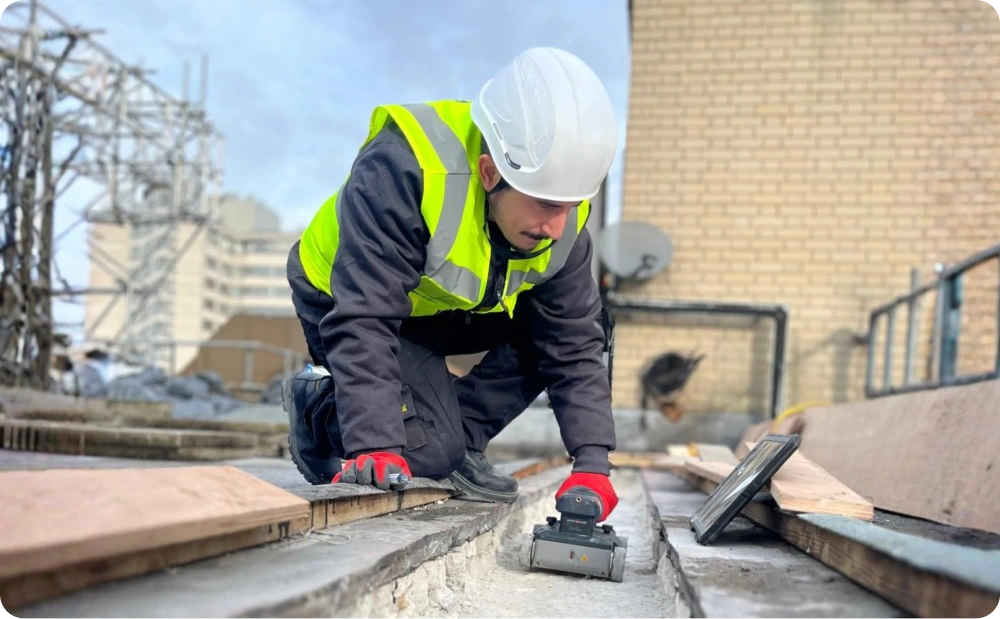
Whether you’re preparing to drill, retrofit, or assess structural integrity, Red Laser is here to help. Our expert team delivers fast, accurate, and professional concrete scanning services using the latest GPR technology.
Every preventable error is a potential cost-saving. The GPR concrete scan helps eliminate expensive surprises and inefficiencies before they happen.
Financial benefits include:
By identifying hidden elements before work begins, GPR minimises disruptions and maximises resource efficiency. Red Laser delivers accurate, non-destructive concrete scanning solutions that protect your project and your budget.
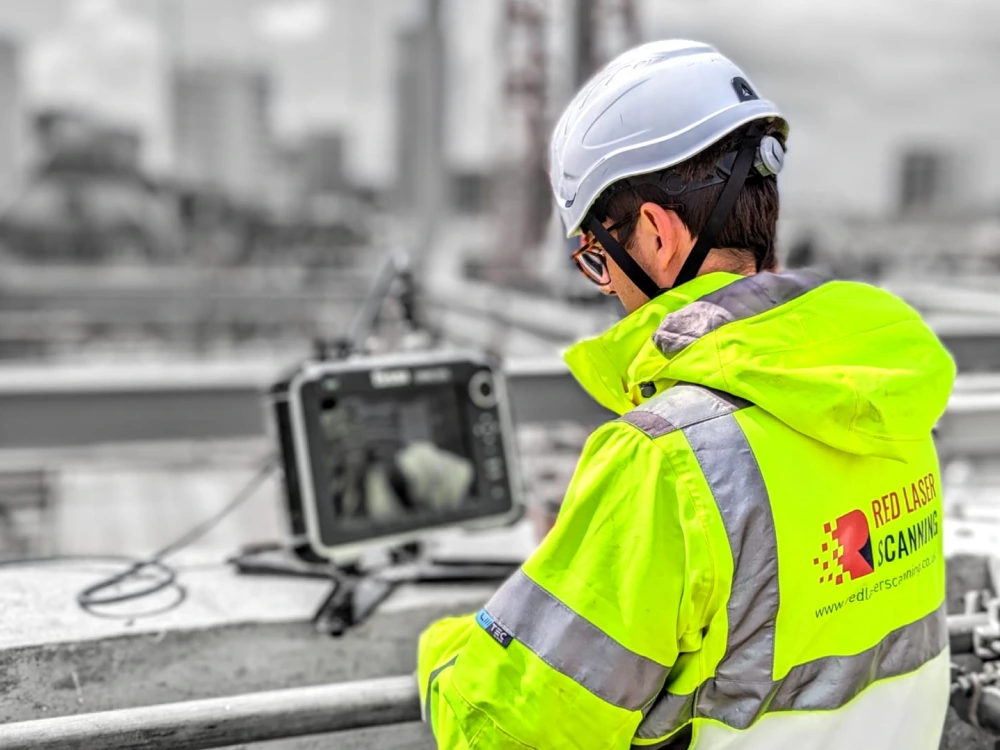
GPR concrete scan isn’t just for pre-cutting scans. It’s a versatile solution used throughout a structure’s life cycle:
In today’s construction environment, you simply can’t afford to guess what’s beneath the surface. The advanced concrete scan with GPR gives you the visibility and confidence to plan smarter, build safer, and avoid costly surprises.
Contact Red Laser today to book a scan or request a consultation.
Let’s make your next project safer, smarter, and more efficient, from the ground up.