Effective construction project with expert surveying and setting out
Discover the uses and benefits of surveying and setting out services with Red Laser. Learn how this reliable service can…






Rebar can be severed. Live conduits can be struck. Post-tension cables can snap under tension.
GPR concrete scanning removes that risk — giving you verified data before drilling, coring, or sawing begins.
At Red Laser, we use ground penetrating radar to locate hidden reinforcement and services inside concrete slabs, walls, and columns. The result is simple: safe cutting, protected structures, and confident decisions.
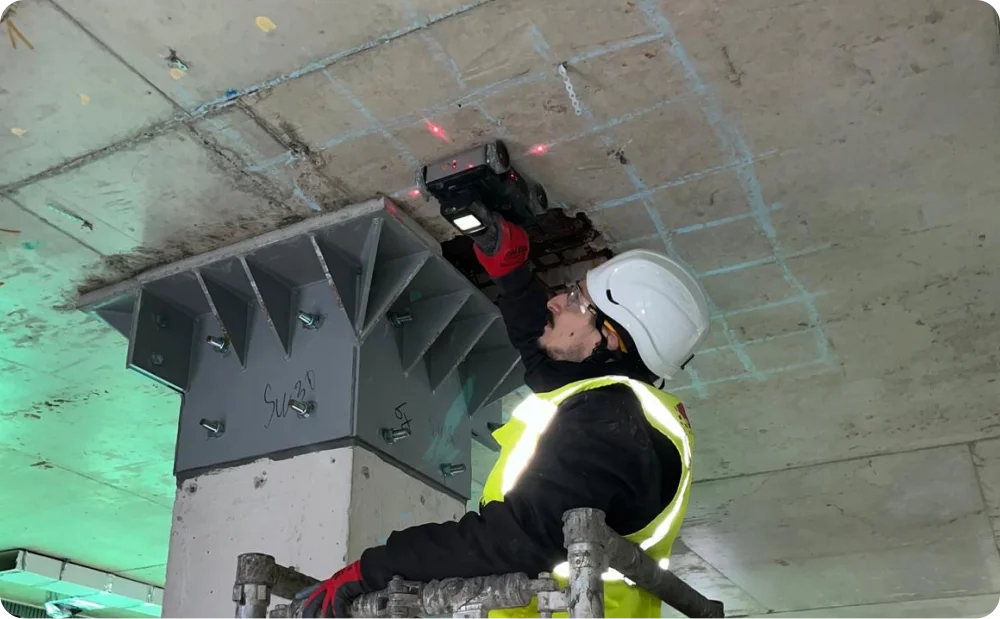
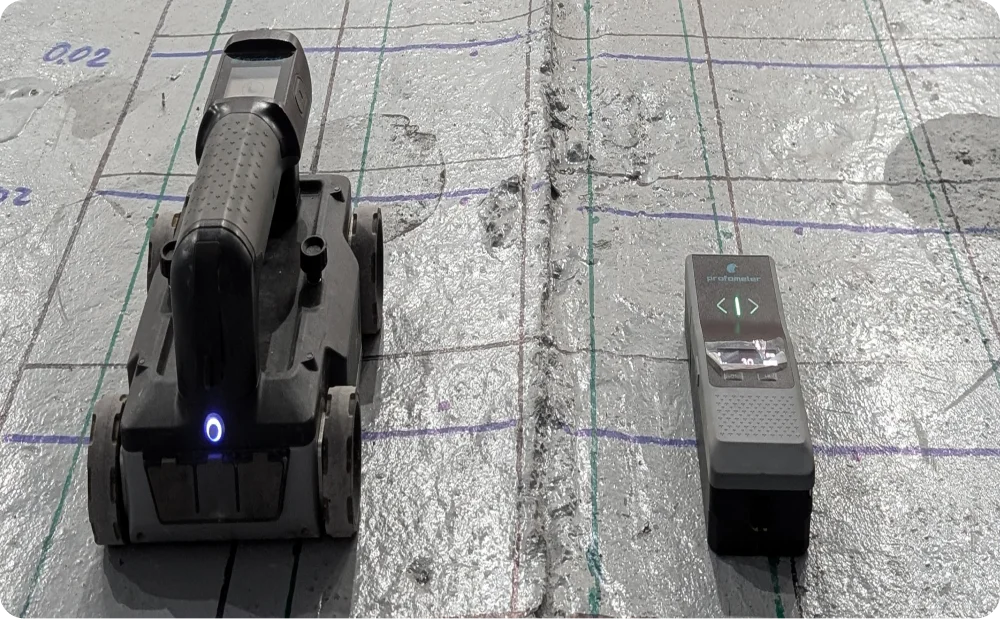
GPR concrete scanning is a non-destructive method of inspecting concrete using Ground Penetrating Radar (GPR) to detect embedded objects before cutting or drilling.
It allows us to identify:
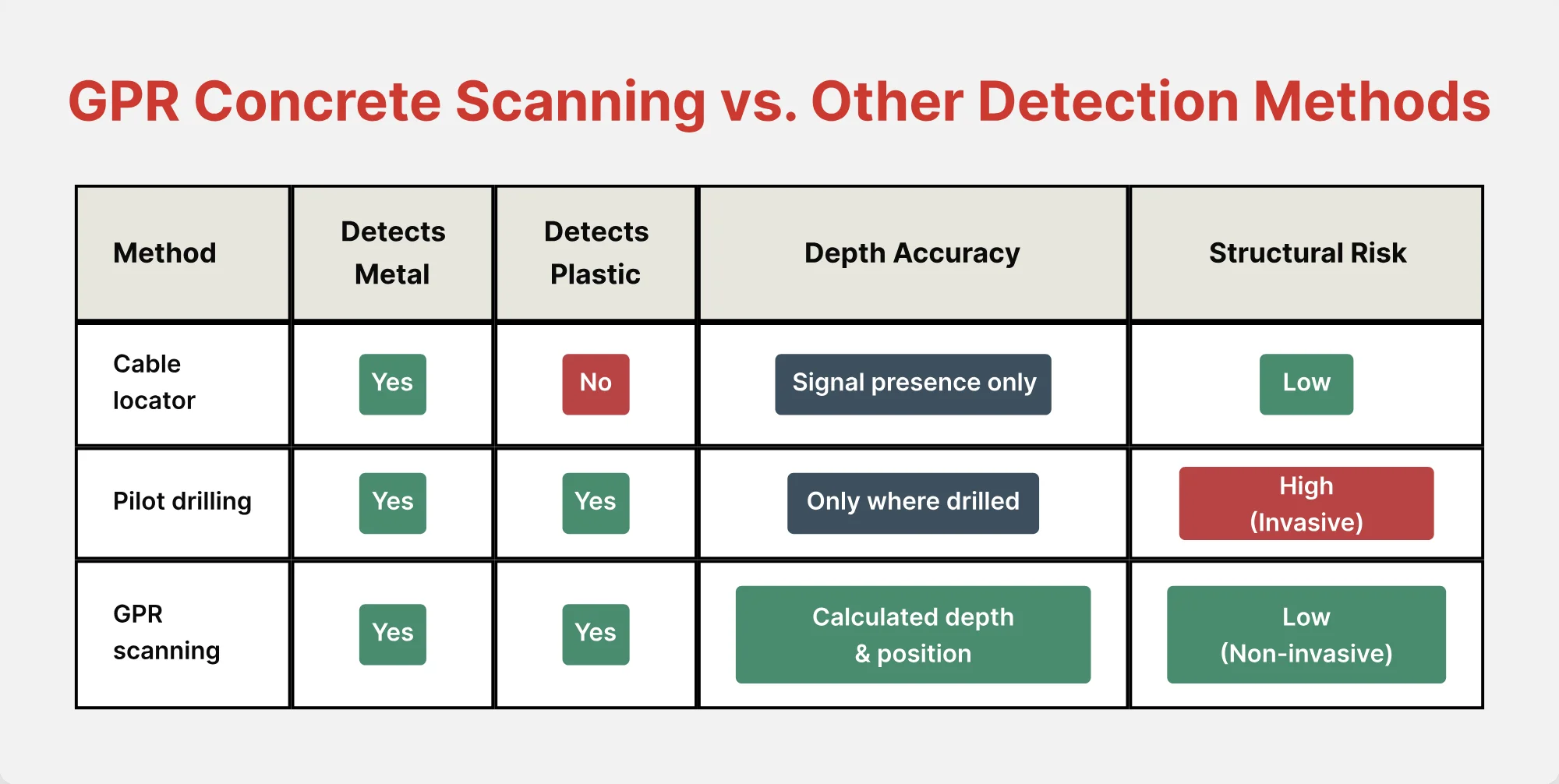
Unlike invasive pilot holes, GPR scanning keeps the structure intact while providing accurate depth and position data.
Ground penetrating radar concrete scanning works by transmitting high-frequency electromagnetic waves into the concrete.
This process allows precise concrete rebar scanning and utility detection without damaging the structure.
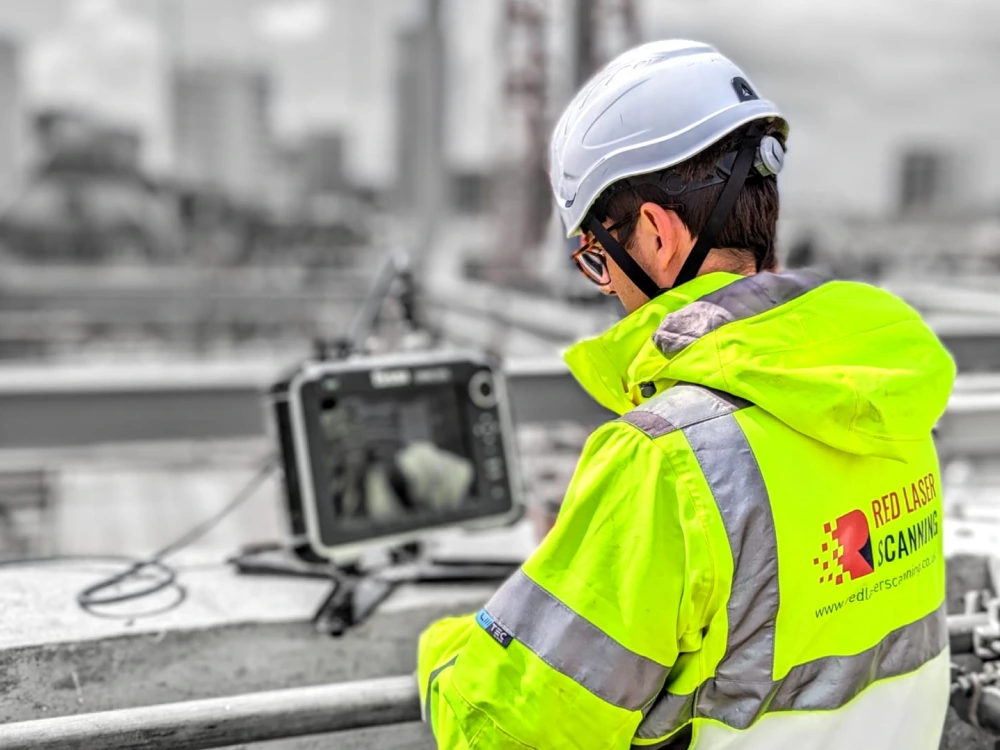
“Blind” cutting is one of the most common causes of avoidable structural damage on UK construction sites. Professional GPR scanning prevents:
A single scan can prevent weeks of disruption.
At Red Laser, we approach every scan with one objective — eliminate uncertainty before penetration begins. We combine high-frequency GPR equipment with experienced interpretation, calibrated to your specific slab conditions. The result is clear, verified data your team can act on immediately.
Because before you cut, you need certainty, not assumptions.
Accurate results depend on the right equipment — and the right operators.
We use high-frequency antennas between 1.5 GHz and 2.7 GHz. This range is optimised for shallow-depth, high-resolution rebar scanning in concrete structures.
Technology supports the process — but experience ensures accuracy.
GPR is not a plug-and-play tool.
Accurate ground penetrating radar concrete scanning requires:
We calibrate each scan based on site-specific dielectric properties. This ensures accurate depth readings.
Concrete produces signal reflections and “ghost” artefacts. Experienced technicians distinguish real services from signal noise.
Data is translated into practical action:
You don’t just receive scan data. You receive clarity.
Whether you’re preparing to drill, retrofit, or assess structural integrity, Red Laser is here to help. Our expert team delivers fast, accurate, and professional concrete scanning services using the latest GPR technology.
When calibrated correctly, GPR scanning provides reliable depth and positional accuracy suitable for structural and service avoidance.
Yes. Ground penetrating radar detects changes in material density, allowing it to identify non-metallic services such as PVC conduits.
Yes. It is a non-invasive, non-destructive testing method that does not damage the concrete.
In concrete, high-frequency antennas are typically effective up to 300-450 mm, depending on slab composition.
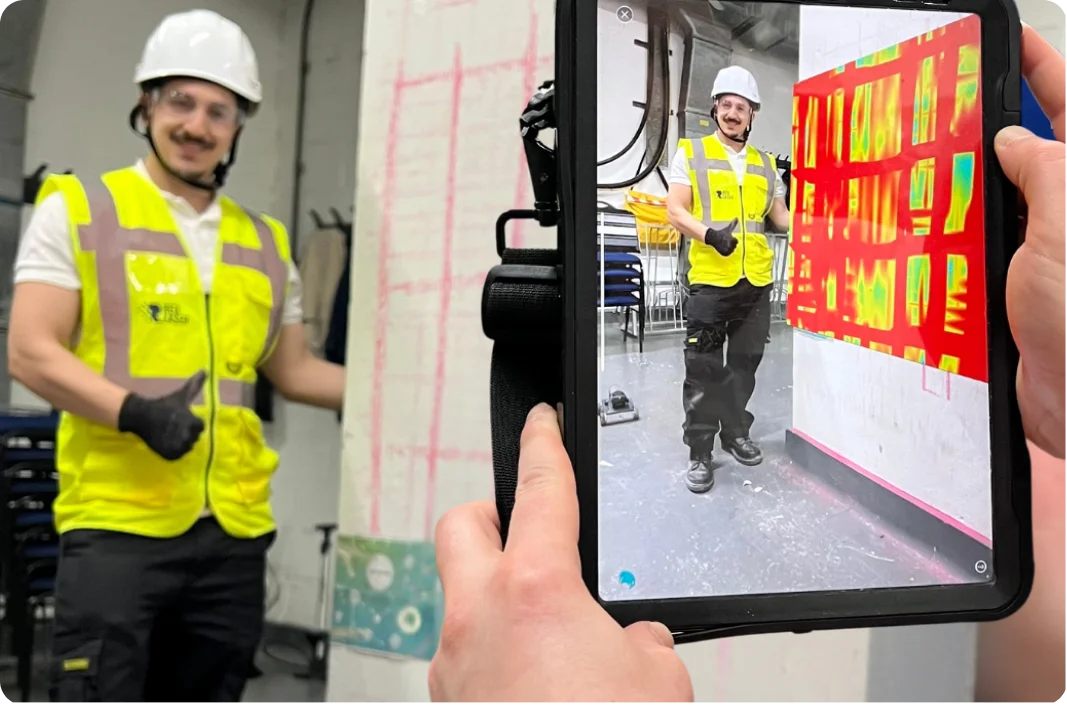
Every cut into concrete carries risk.
GPR concrete scanning removes uncertainty by revealing what lies beneath the surface — before work begins.
At Red Laser, we combine advanced equipment with experienced interpretation to deliver clear, verified results. No guesswork.
No assumptions. Just accurate data you can act on.
If your project involves coring, drilling, or structural modifications, speak to our team.
We’ll assess your site, define the scope, and deliver precise GPR scanning that keeps your project safe and on track.